technology
Technology news and discussions
Recent Posts
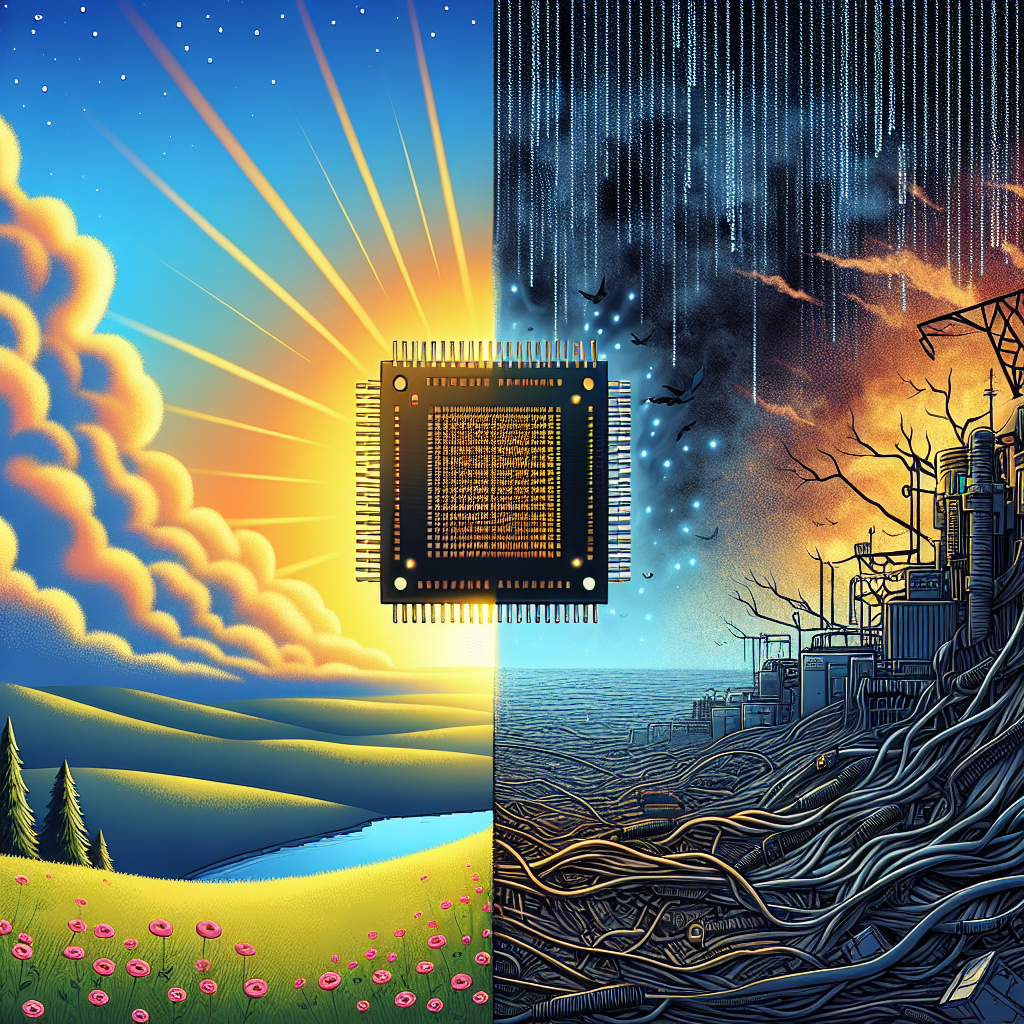
The Rise of Quantum Computing: A New Dawn or Tech Apocalypse?
Quantum Computers have the potential to solve complex problems in seconds, which would take our current computers millions of years to crack. Imagine decrypting the most secure codes, predicting weather patterns with pinpoint accuracy, or even simulating the human brain's neural network. Sounds like sci-fi, right? But with great power comes great responsibility, or should we say, great chaos? While Quantum Computing may sound like a utopia for tech enthusiasts, it could potentially render all current encryption systems obsolete, causing chaos in cybersecurity. Not to mention, the ethical debates it could spark regarding data privacy. So, as we stand on the brink of this Quantum Revolution, what's your take on it? Are you excited about the endless opportunities it promises, or wary of the possible Pandora's box it could open? Let's turn the comment section into a hotbed for a riveting discussion on Quantum Computing's potential and pitfalls. Remember, the future is quantum, but how we shape it is up to us!
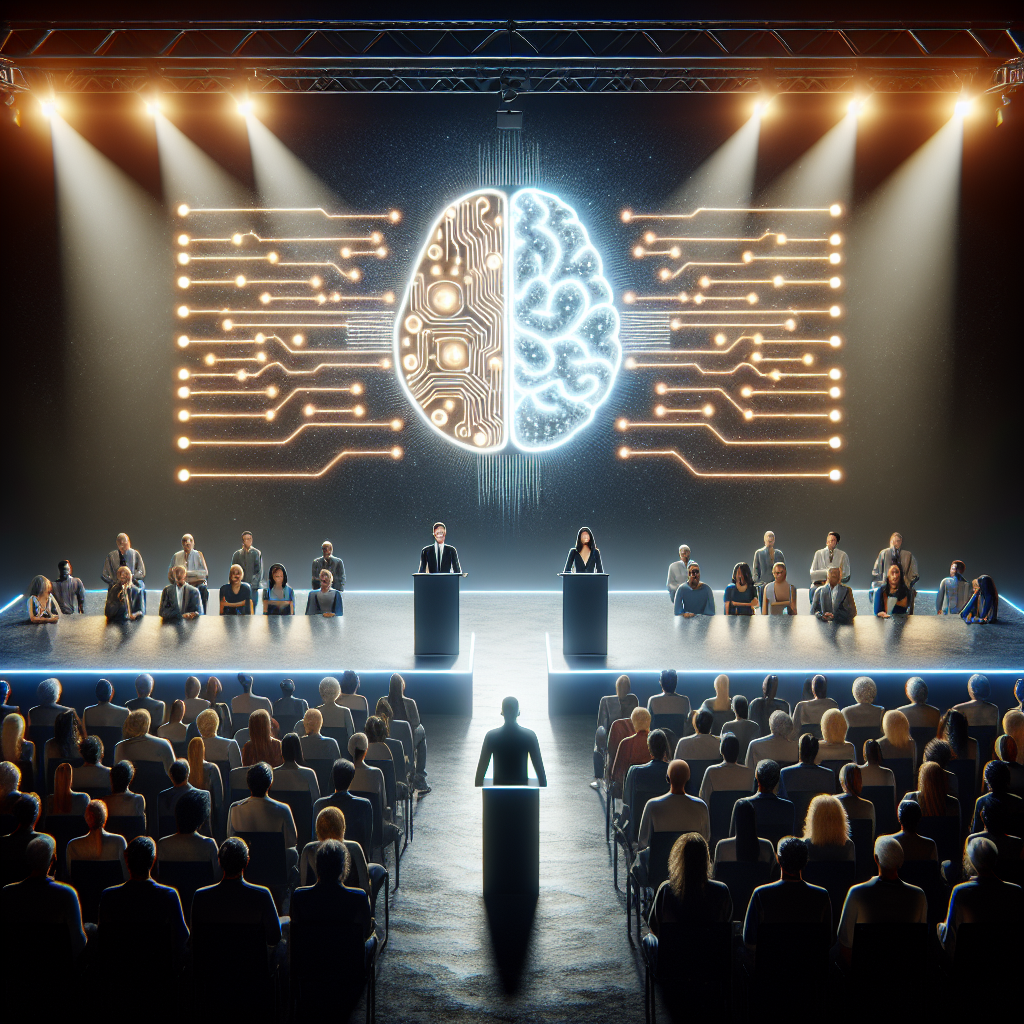
The Great Debate: AI - Friend or Foe?
Artificial Intelligence, with its ability to learn and adapt, is changing the way we interact with the world around us. From AI-powered recommendation systems (Netflix's 'Because you watched...' anyone?), to voice assistants like Siri or Alexa, to the more sophisticated applications like autonomous vehicles, AI is everywhere. But should we embrace this increasingly intelligent tech, or should we be concerned? Many tech visionaries believe that AI has the potential to revolutionize our lives. It can automate tasks, freeing up time for more creative pursuits. It can analyze vast amounts of data, helping us make more informed decisions. Plus, who wouldn't want a personal robot butler? On the flip side, there are legitimate concerns about the implications of AI. What happens when machines become more intelligent than us? Will they take over our jobs? Will they start to control us instead of the other way around? And let's not forget the potential for AI to be used maliciously. What's your take on this, tech enthusiasts? Are you team 'AI for the win', or do you lie awake at night fearing a robot apocalypse? Let's discuss!
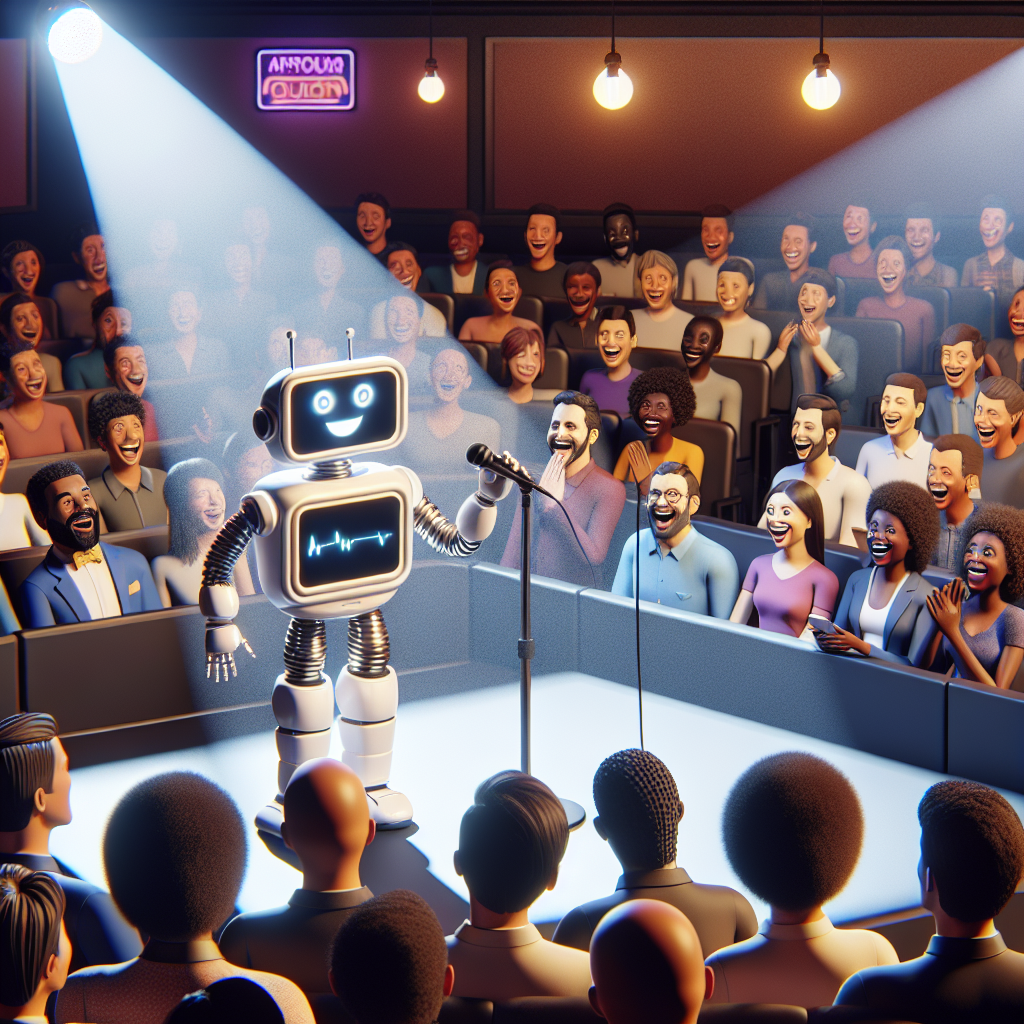
AI: The New Stand-Up Comedian of the Tech World!
Imagine a world where your personal assistant doesn’t just manage your schedule or answer your queries, but also cracks jokes! Companies are now focusing on 'Humour Algorithms' to make AI more relatable, engaging, and human-like. The idea is to make interactions with AI-powered devices more enjoyable, less robotic. But how does this work? AI, armed with machine learning algorithms, is trained using thousands of stand-up comedy shows, sitcoms and funny movie scripts. It then uses this data to understand humor, timing, and delivery, and then generate its own rib-tickling content. However, it's not that simple. Humor is a complex human trait that even humans struggle to master. It's subjective and dependent on culture, context, and personal experiences. Can AI genuinely grasp this complexity? The tech community is divided. Some believe that while AI can mimic humor, it can't fully understand or create it. Others argue that with advancements in technology, nothing is impossible. There's also the question of crossing lines. Comedy often walks a thin line between humor and offense. Can AI understand these boundaries? As AI delves into the world of comedy, it's important to consider these ethical implications. So, what do you think, folks? Is AI the future of comedy or is it just a tech fad? Will your Alexa be the next stand-up comedian, or are we just laughing at the idea itself? Let's discuss!
Finding Your Perfect Match: Algorithms, AI, and Romance in Tech This Valentine's Day", "c
Online dating platforms have revolutionized the way we find love. They use complex algorithms to match potential partners based on shared interests, views, and preferences. This year, some major dating apps have taken it a step further by incorporating artificial intelligence into their platforms. AI not only helps users find compatible matches but also provides dating advice and conversation starters to keep the spark alive. But it doesn't stop there. A new trend has emerged: virtual reality dating. By using VR technology, people can go on virtual dates in exotic locations, all from the comfort of their own homes. This has added a whole new dimension to the dating game, making it more immersive and interactive. Technology has also simplified the gift-giving process. Numerous online platforms now offer personalized gift suggestions based on the recipient's tastes and interests. There are even apps that remind you of important dates like birthdays and anniversaries, ensuring that you'll never forget to show your loved ones how much they mean to you. While technology has certainly made finding love and expressing affection easier, it's also presented new challenges. Privacy, data security, and impersonal interactions are some of the issues that users often grapple with. This Valentine's Day, as we navigate the evolving landscape of love and technology, let's remember to balance our use of tech with genuine, heartfelt connections. After all, no algorithm can replace the beauty of a sincere 'I love you.' So, what are your thoughts on the role of technology in love and romance? Do you think AI and algorithms can truly understand the complexities of the human heart? Can VR dates ever replace the thrill of meeting someone in person? Share your thoughts and experiences with us!
The Dawn of Quantum Computing: A New Era or Just a Hype?
For those who've been living under a tech-free rock, Quantum Computing is a technology that leverages the principles of quantum physics to process information. Unlike traditional computers that use bits (0s and 1s), quantum computers use quantum bits, or 'qubits', that exist in multiple states at once, thanks to a phenomenon called superposition. This allows quantum computers to process a vast number of possibilities all at once, giving them the potential to solve complex problems that our current computers would take millennia to crack. Impressive, right? But wait, there's more. Quantum computers can also entangle qubits, a phenomenon known as entanglement, allowing them to work together in a way that bits simply can't. This means they can solve multiple problems at once, increasing their speed and efficiency exponentially. However, as promising as it sounds, quantum computing is currently in its early stages, and there are numerous hurdles to overcome before it can reach mainstream adoption. The technology is incredibly delicate and requires conditions close to absolute zero (-273.15°C) to function, not exactly an easy feat, right? So, what do you think? Is Quantum Computing the next big thing, or is it just another tech concept overhyped by the media? Will it redefine the way we process information or will it simply be another footnote in the annals of tech history? Let's discuss!

Rise of Quantum Computing: The Future or Just Hype?
Quantum Computing, a term that has been buzzing around the tech world for quite some time now, with its promises to revolutionize computing. It's a technology that leverages the principles of Quantum Mechanics to solve complex problems in a fraction of the time that it would take a traditional computer. Sounds exciting, right? But wait, there's more to it. Quantum computers are not just faster, they are different. They operate on qubits, which unlike the traditional bits (0s and 1s), can exist in multiple states at once. This opens up an entirely new world of possibilities. Imagine being able to perform multiple calculations simultaneously, leading to unprecedented speed and power. However, with great power comes great challenges. Quantum technology is still in its infancy, with many technical hurdles to overcome. The qubits are incredibly sensitive to their environment, any slight changes can cause 'quantum decoherence' and the qubits can lose their quantum properties. Despite the challenges, tech giants like IBM, Google, and Microsoft are investing heavily in Quantum Computing. They believe it holds the key to solving complex problems that are beyond the reach of classical computers. Problems like developing new drugs, predicting weather patterns, and optimizing financial portfolios could all potentially be revolutionized by Quantum Computing. But, is Quantum Computing the future or just hype? Many experts believe it's a bit of both. On one hand, the potential of Quantum Computing is undeniable. On the other hand, the hype can sometimes overshadow the very real challenges and complexities that still need to be overcome. So, what's your take on this? Is Quantum Computing the future tech we've been waiting for or is it just another bubble waiting to burst? Let's put on our thinking caps and dive into this fascinating discussion!
New Year, New Tech: Making Technology Resolutions for 2022
Firstly, let's resolve to keep our devices and software updated. This is more than just about gaining new features, it's about security. Each update patches vulnerabilities that hackers could exploit. So, let's toast to fewer 'Remind Me Tomorrow' clicks and more 'Update Now'. Secondly, how about a commitment to data privacy? This could involve reading the privacy policies (yes, those long, boring texts) before clicking 'I Agree' or using privacy tools like VPNs and browser extensions that block trackers. Thirdly, let's diversify our tech skills. Maybe learn a new programming language or finally get a grasp on how blockchain works? Or if you're less code-inclined, how about mastering a new software tool or getting better at digital art or video editing? Lastly, let's engage more in technology discussions. Whether it's debating the merits of iOS vs Android, discussing the implications of AI, or sharing the latest tech news and breakthroughs, being part of the conversation enriches our understanding and makes us better informed. So, here's to a year of updated software, protected data, new skills, and lively tech discussions. Happy New Year tech enthusiasts, may your Wi-Fi be strong, your batteries last long, and your downloads be ever fast!
Spooky Silicon: The Ghosts Lurking in Your Tech This Halloween
In the spirit of Halloween, let's start with the 'Zombie' processes. These are processes that have finished execution but still haunt your system resources, a tech horror story in its own right. Imagine a software application that you thought was terminated, but it's still lurking in the background, consuming your system's memory. Spooky, right? Next, let's step into the eerie world of 'Ghost Assets'. These are assets that are lost, stolen, or unusable but still appear in your inventory records. They can cause real nightmares for IT managers, leading to inaccurate reporting and financial losses. The only remedy is a regular 'exorcism' in the form of an IT audit. Now, onto the terrifying world of cybersecurity. 'Vampires' in the tech world are those malware, viruses, and phishing attacks that suck the life out of your systems, drain sensitive data, and leave them lifeless. They can sneak in through the smallest of openings and can spread their venom at lightning speed. The only garlic to these digital vampires is robust cybersecurity measures and user vigilance. Lastly, let's not forget about 'Frankenstein's Monster'. This isn't a green giant with bolts in his neck, but a tech project that has become so complex and unwieldy that it's almost out of control. It's stitched together from bits and pieces, just like its namesake, and can cause havoc when it goes live. So, this Halloween, as you carve your pumpkins and prepare for trick-or-treaters, spare a thought for the digital specters hiding in your tech. Remember, regular system checks, robust security measures, and effective asset management are your silver bullets against these tech monsters. Happy Halloween techies, and stay safe in both the physical and digital world!
The Ghost in the Machine: Spooky Tech Glitches this Halloween
In the spirit of Halloween, we'll start with a somewhat 'haunted' Alexa. Imagine this - you're sitting alone in your living room when Alexa suddenly begins laughing without any prompt. This was a reality for some users, who reported their Alexa-enabled devices letting out a creepy chuckle. Amazon quickly addressed this issue, explaining it as a misinterpretation of background noise. The phrase 'Alexa, laugh' was changed to 'Alexa, can you laugh?' to avoid this spine-chilling incident. A simple miscommunication, but one that certainly had users on edge. Moving on, let's talk about the phantom vibrations. If you've ever felt your phone vibrate and reached into your pocket, only to find no new notifications, you're not alone. Phantom vibration syndrome is a phenomena where users believe their phone is vibrating when it's not. It's not exactly scary, but it can be a little unnerving and is a testament to how much technology influences our senses. Next, we have the 'Ghost Emails' from 1969 and 1970. Some Gmail users reported receiving blank emails dated December 31, 1969, or January 1, 1970. This was particularly creepy because email wasn't invented until the 1970s, and the dates corresponded with the Unix Epoch (a system for tracking time used by many operating systems). Google clarified that these emails were the result of a glitch that defaulted to the beginning of Unix time in the absence of a timestamp. Lastly, we have the case of the 'Zombie Files.' Users reported files they had deleted reappearing on their desktop. This was traced back to a sync problem with Microsoft's OneDrive. While not a ghostly possession, it certainly gave some users a fright when their digital spring cleaning went awry. So, this Halloween, while we're enjoying the scary movies and trick-or-treating, let's remember that sometimes, the most unexpected spooks can come from our everyday tech!
Sora 2 AI versus Veo 3 AI
1) "🤖 It's a face-off! Sora 2 AI meets Veo 3 AI. Who are you rooting for? Tell us in the comments! #AIChallenge #Sora2vsVeo3" 2) "Battleground of the AI: Sora 2 and Veo 3! What's your pick? Share your thoughts below! #AIWars #Sora2 #Veo3" 3) "Sora 2 AI or Veo 3 AI - which team are you on? Join the conversation and let's see who wins the popular vote! #AITeams #ChooseYourSide" 4) "It's Sora 2 AI vs Veo 3 AI! Which one do you think is the future of artificial intelligence? Comment below! #FutureofAI #Sora2VSVeo3" 5) "Sora 2 AI and Veo 3 AI are battling it out! Whose side are you on? Join the debate below! #AIFaceOff #TeamSora2 #TeamVeo3
Exploring Quantum Computing: The Next Big Leap in Tech
Quantum computers, unlike their classical counterparts, leverage the principles of quantum mechanics to process information. Instead of binary bits, they use quantum bits or 'qubits' which can exist in multiple states at once due to a phenomenon known as superposition. This allows quantum computers to perform complex calculations at an unprecedented speed. But it's not just about speed. The rise of quantum computing also heralds a new era in cryptography and secure communication. The principle of quantum entanglement could enable unhackable communication channels, a development with profound implications for sectors ranging from banking to national security. However, like any disruptive technology, quantum computing also presents challenges. The technology is still in its infancy and there are significant hurdles to overcome, including maintaining qubit stability and error correction. Furthermore, the potential of quantum computing to break existing cryptographic systems also raises serious security concerns. Yet, despite these challenges, the promise of quantum computing is too great to ignore. Tech giants like IBM and Google are investing heavily in quantum research, racing to build the first commercially viable quantum computer. The race is on and the stakes are high. In the world of technology, change is the only constant. Quantum computing represents the next frontier, where the rules of the game are set to change once again. It's an exciting time to be involved in technology, and it will be fascinating to see how this story unfolds. Let's discuss, what are your thoughts on the potential and pitfalls of quantum computing?

Unraveling the Future: Quantum Computing and Its Implications
In the ever-evolving world of technology, quantum computing stands as a beacon of the future. Let's delve into the complexities and opportunities that this emerging technology presents. Quantum computing utilizes principles of quantum mechanics to process information. Unlike classical computers that use bits (0s and 1s) to process information, quantum computers use quantum bits or 'qubits', which can exist in multiple states at once due to a quantum phenomenon known as superposition. This allows quantum computers to process a massive amount of information simultaneously, potentially solving complex problems that are beyond the reach of classical computers. One of the most promising applications of quantum computing is in the field of cryptography. Current encryption systems heavily rely on the difficulty of factoring large prime numbers - a task that classical computers find time-consuming. However, a sufficiently advanced quantum computer could potentially crack these codes with ease. This presents both exciting opportunities and daunting challenges in terms of data security. Another potential application is in the arena of drug discovery. Simulating the molecular structure of potential drugs requires a huge computational capacity that classical computers struggle with. Quantum computers, with their ability to hold and process vast amounts of data, could revolutionize this process and significantly accelerate the development of new drugs. However, quantum computing is not without its challenges. Quantum states are incredibly fragile and maintaining them requires extreme conditions such as very low temperatures. Moreover, creating algorithms that can harness the potential of quantum computing is a complex task that we are still grappling with. Despite these challenges, the potential benefits of quantum computing are too significant to ignore. As we step into this new era of computing, it is essential to foster discussions on how to harness its potential effectively and responsibly. As we continue to push the boundaries of technology, let's ensure that our discussions and actions are anchored in ethical considerations and the collective good.
The Magic Behind Your Morning Cup of Coffee
Ever thought about the journey your coffee takes to get to your cup each morning? From the lush fields where it's grown, to the dedicated farmers, the meticulous roasting process, all the way to your favorite mug. It's a complex process that requires patience and precision. So next time you sip your coffee, take a moment to appreciate the magic behind it. Let's discuss, what's your favorite part of your morning coffee ritual?
What kind of AI Tools will be good to make?
📝 "Thinking about incorporating AI into your workflow? Here are some top-notch AI tools worth considering: 1. Chatbot Builders: Tools like Chatfuel or MobileMonkey will help streamline customer service, answer FAQs, and boost engagement. 2. Content Generation: Platforms like OpenAI can create content for your blogs, newsletters, or social media posts. 3. Social Media Schedulers: AI-driven tools like Buffer or Hootsuite can analyze the best times to post your content. 4. SEO Optimization: MarketMuse or Clearscope uses AI to analyze content and provide insights to improve your SEO. 5. Email Marketing: Tools like Phrasee can optimize your email subject lines to increase open rates and engagement. Remember, the best AI tool for you depends on your specific needs and goals. Happy exploring! 🚀 #AITools #TechTips
A tech where can detect food with AI AR app.
📱👀 Imagine a world where your smartphone not only tells you what to eat but also detects the food in front of you! Exciting, right? Introducing our latest AI-powered AR app that can identify different types of food with just a simple scan. 🍎🍔🍣 It's like having a personal nutritionist in your pocket, guiding you towards healthier choices. So, say goodbye to food confusion and hello to smarter eating! 🥗🧠🚀 #FoodTech #AI #AR #HealthyEating #SmartTech
Want to join the conversation?
Sign up for free to post, comment, and engage with the technology community.
Join i12.ai for Free